
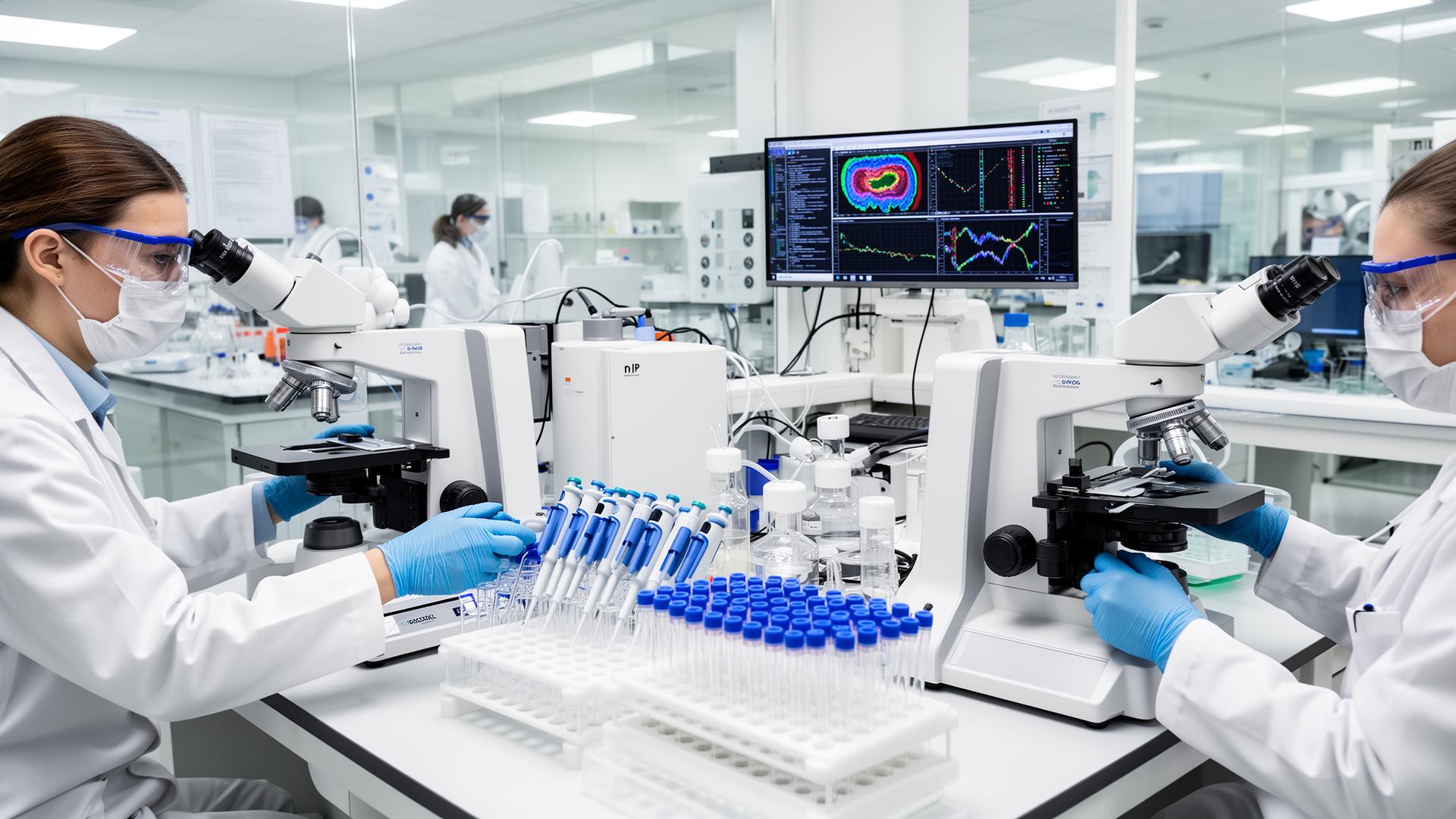
BioTech Platform
Research infrastructure for biological discovery and translation.
How this platform works in everyday language.
Modern biotechnology and medical research create enormous amounts of laboratory data. Genetic sequencing machines, clinical trials, and molecular models generate millions of files that researchers struggle to organize. Important medical breakthroughs get trapped on individual laboratory hard drives, delaying treatments for diseases that affect millions. Cerebro Dynamics BioTech gives universities, research institutes, and pharmaceutical laboratories a secure workspace to combine genetic data, clinical test outcomes, and experimental findings. Scientists can test hypotheses faster, collaborate across borders safely, and turn lab discoveries into real medicines.
What this platform addresses.
Biological data is generated faster than it can be unified, governed, and reasoned over. Cerebro Dynamics BioTech makes research data first-class, structured, and translation-ready.
Who uses this platform in daily work.
Analyzes DNA and RNA sequencing reads from thousands of regional patient samples to identify genetic resistance to malaria.
Tracks volunteer patient health outcomes, dosage responses, and adverse events across four university teaching hospitals.
Runs machine learning models on protein structures to find promising chemical compounds for new antibiotics.
Ensures all research studies comply with ethical review boards, patient consent permissions, and data privacy laws.
How the system is built.
Multi-omic data fabric with structured experimental metadata, model integration, and governed collaboration layer.

What ships in the platform.
Multi-omic integration with experimental provenance.
Train, evaluate, and serve research models.
Cohort and study management.
Inter-institutional governed collaboration.
What it does.
- 01Multi-omic integration (genomic, proteomic, metabolomic)
- 02Experimental metadata and provenance
- 03Computational model integration
- 04Cohort and study management
- 05Secure collaboration across institutions
- 06Translation pipelines from research to clinic
Real-world operational examples.
Mapping Antimalarial Drug Resistance Across West Africa
Scientists suspected that a common malaria parasite was mutating and resisting standard front-line treatments, but blood samples were held in six isolated university labs.
Using the Omic Fabric module, researchers unified genomic sequencing data from three thousand patients while respecting institutional data ownership. They pinpointed the exact genetic mutation responsible for drug resistance within three weeks, allowing health authorities to update treatment guidelines.
Accelerating Clinical Trials for Sickle Cell Therapies
A medical research consortium needed to assemble a verified patient cohort for a new therapeutic trial, a process that usually took fifteen months of manual hospital record checks.
The Cohort Studio searched governed clinical databases using secure de-identification filters. Investigators identified four hundred eligible clinical candidates in two weeks, cutting trial preparation time by over seventy percent.
A typical operating loop.
A research lead integrates datasets across studies, runs comparative analyses, and shares structured findings with partners under defined access policy.
Data model.
Genomic, proteomic, clinical, and instrument data with research ontologies.
Posture.
Subject privacy, IRB compliance, and rigorous access governance.
DeploymentSovereign or institutional cloud.
What operators ask before deployment.
Where it is deployed.
- Research and Biotechnology
- Healthcare